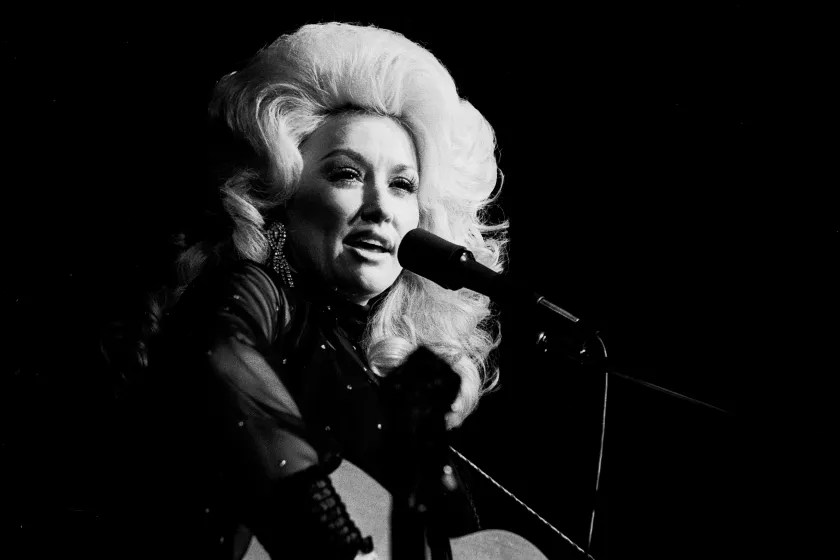
Film critic Roger Ebert shared this memory about Dolly Parton and his colleague Gene Siskel in his memoir Life Itself (2011).
“I had a one-on-one interview with Parton in a hotel suite. As we spoke, I found myself enveloped by her presence. This had nothing to do with sex appeal. Far from it. It was as if I were being mesmerized by a benevolent power. I left the room in a cloud of good feeling. Next day, Siskel and I were sitting next to each other on an airplane. “This will sound crazy,” he said, “but when I was interviewing Dolly Parton, I almost felt like she had healing powers.”
I don’t know that I have ever spent time with someone who would fit such a description, but I imagine that such a person would be kind, confident, gentle, and maybe a little vulnerable. This is a person who is at peace with herself, knows how to talk to people, and knows how to face almost any situation.
And we’re talking about Dolly Parton, so we also know such a person is extremely philanthropic. She has donated over 100 million books over 850,000 children worldwide. She gave a $1 million+ gift to Vanderbilt University to help them develop the COVID-19 vaccine, and she has made several other significant financial gifts to help people in her community and beyond.
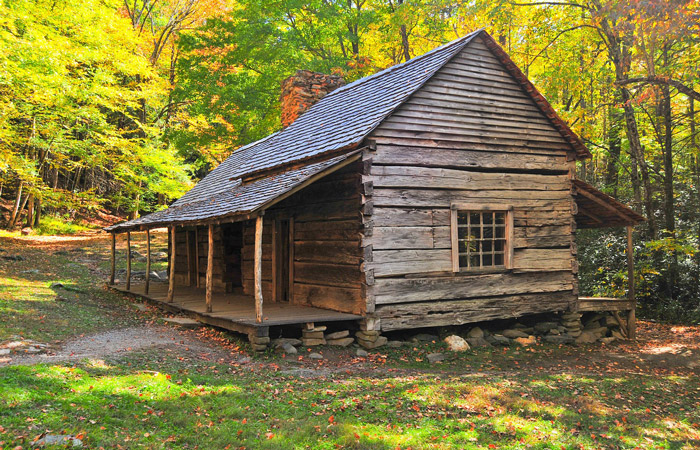
We know that Dolly Parton is one of 12 children who grew up in a one-room cabin in Little Pigeon River, TN, and that she went on to become of the most successful musical artists of our time. She has released 44 Top Ten albums, and has sold over 100 million records.
Dolly is such a big force of nature, talent and goodness that it is hard to imagine that she began her career as a TV side-kick. In 1967 she joined The Porter Wagoner Show, a popular Nashville television program, as Porter’s sidekick and muse. They recorded many duets together, and Dolly’s talent and appeal was immediately unmistakable. She began to write her own songs, leaving Porter Wagoner after just a few years, and starting her own career.
In 1973 Parton recorded and released “Jolene.” Inspired by a fan whose name she could not get out of her head, and recorded in the famed Nashville RCA Studio B with some of the great session musicians of the time, “Jolene” is different than what country music fans were used to hearing at the time.
During a time when female country artists where asserting their strength and independence with songs like “Fist City,” (I’ll punch you if you try to take my man) “Don’t Come Home a-Drinking with Lovin’ On Your Mind,” (You’re not gettin’ any tonight if you’re drunk) “Your Good Girl’s Gonna Go Bad” (Be careful what you wish for) or “You Ain’t Woman Enough,” (the rest of the line is “to take my man), Dolly was singing about something else.
Dolly was singing a plaintive song to another woman. A song about a woman who was a threat to her marriage. A song that acknowledges the other woman’s power. A song that asks another woman for understanding.
This is really a fascinating song. Rather than starting with the usual country music “intro” melody, “Jolene” starts with a rolling, brooding guitar lick. The drums are muted and joined by bongos, a strange country music instrument at the time that pre-dates the disco craze which would arrive in just a few years.
“Jolene, Jolene, Jolene, Jolene
I’m begging of you, please don’t take my man
Jolene, Jolene, Jolene, Jolene
Please don’t take him just because you can.“
Beginning with the chorus, Dolly immediately acknowledges that Jolene, the “other woman,” is in control. Dolly knows that Jolene can have whatever she wants, and she hopes that Jolene will listen to her plea.
“Your beauty is beyond compare with flaming locks of auburn hair
With ivory skin and eyes of emerald green
Your smile is like a breath of spring, your voice is soft like summer rain
And I cannot compete with you, Jolene.”
This is not a contest, and this is not a threat. This is one woman talking to another, asking her, begging her.
“He talks about you in his sleep and there’s nothing I can do to keep
From crying when he calls your name, Jolene
But I can easily understand how you could easily take my man
But you don’t know what he means to me, Jolene.“
The song is sung like a quiet conversation, speaking in hushed tones so nobody else will hear. Ironically, Dolly does not express anger at her “man” for being attracted to Jolene. A reflection of the times perhaps, or just her acknowledgement that sometimes people fantasize and dream of other people, and she can’t wish that away if she tried.
“You could have your choice of men but I could never love again
He’s the only one for me, Jolene
I had to have this talk with you, my happiness depends on you
And whatever you decide to do, Jolene.“
She sits down with Jolene to talk with her. To reason with her. To acknowledge that Jolene is in charge. She begs Jolene to leave her man alone.
But Jolene never responds in the song. She doesn’t have to. “Jolene” is not about an outside force that threatens to destroy a family, the song is about the person who stands up to that threat, to any threat, and finds humanity and connection in an otherwise impossible situation.
“Please don’t take him just because you can.”
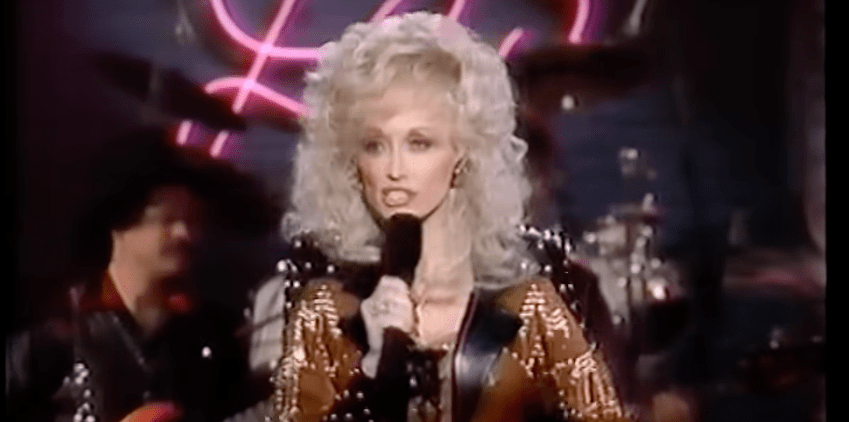
“Jolene”
Written and Performed by Dolly Parton
Released October 15, 1973


 All Together Now
Leave a comment