
We have all said it at one time or another about that artist who was so important to us as we first discovered the music we loved as kids and teenagers. That artist who got us through tough times. That artist whom we devoted ourselves to. When they release new music in later years, our response often falls along the lines of:
‘Yeah, it’s pretty good. But I like their old stuff.”
Understandable, because the music this artist is releasing now is not the music that first attracted us to their work.
Understandable, because their old stuff was released when they were young, and hungry, and daring.
Understandable, because “their old stuff” brings us to a time of our own life of discovery, excitement and unbridled passion for that next great song.
Bruce Springsteen released his first album, Greetings from Asbury Park, in 1973 when he was only 24 years old. Evocative of early Bob Dylan, the lyrics were blisteringly original, and the music by the E Street Band was dense and complex.
Throughout the 1970’s and 1980’s Springsteen released some of the greatest, best-selling music of the rock and roll era. His lengthy, energetic concerts were the stuff of legend, and with every new album he explored new musical territory and subjects. His music was big and cavernous. His lyrics laid bare the pain and desire and yearning we all felt. He could wink and smile, and a stadium of 30,000 people would light up with joy.
And then, out of nowhere in the early 1990’s, Springsteen moved on from the E Street Band to explore new sounds and experiences through solo albums and side projects.
When Springsteen eventually reconvened the E Street Band with a massive reunion tour in 1999, some argued that his best days were behind him. Nothing would ever be as good as Born to Run or The River. From now on, he would just be a greatest hits act, resting on his laurels.
Yeah, not so much.
Though Bruce was back in the warm embrace of his familiar and comfortable band, he continued to release some of the very best music of his career throughout the 2000’s. I like his old stuff too, but a lot of his “new stuff” deserves our attention.
With your permission…

The Rising (2002)
After the horrors of the 9/11 attack, Bruce released the first E Street Band album since Born in the USA almost 20 years earlier. “The Rising” is a gothic, celebratory tribute to the firefighters who walked up to their deaths in the twin towers, and the families they left behind. And though “My City of Ruins” was written about the decaying city of Asbury Park, NJ, it serves as a haunting, beautiful prayer for any city that ever suffered, for any city that has fallen into despair.

Devil’s and Dust (2005)
Springsteen was now dedicated to making the music he wanted to make, how he wanted to make it, whether the E Street Band was involved or not. Reflecting on the Iraq/Kuwaiti war, Springsteen next released the solo album Devils & Dust.
Amongst several sharp and spare political statements on the album is “Long Time Coming,” a lovely soliloquy about his commitments to be a good father to his young children, and to the children who are on their way.

The Seeger Sessions (2006)
Bruce Springsteen then celebrated the folk music that served as the bedrock of rock and roll. Replacing the E Street Band with a rag tag collection of New York City’s finest acoustic folk musicians, Springsteen recorded an album and mounted a world tour that was pure joy and honky-tonk goodness. “My Oklahoma Home” is a sad, often hilarious tale about the hardships of homesteading in Oklahoma during the dust bowl days. In “How Can a Poor Man Stand Such Times and Live,” Springsteen adapts a depression era tale of financial hardships to deliver a blistering condemnation of local and national leaders dealing with the aftermath of Hurricane Katrina in New Orleans.
Those who know me well, know that the Seeger Sessions concert I saw in 2006 remains on of my very favorite concerts ever; a true celebration of music, collaboration and community. I dearly hope he chooses to revisit this project.

Magic (2007)
Now recording again with the E Street Band, Magic is one of Bruce’s most beloved and respected albums of recent years. “Long Walk Home” is a sad exploration of those things that divide Americans, and the commitment we need to make to return to a place of shared values and aspirations.
“Radio Nowhere” imagines a country of desolation and loneliness, and cries out for connection and meaning.

Working on a Dream (2009)
Though there are some very unfortunate song selections included on this album (anyone remember “Outlaw Pete” or “Queen of the Supermarket”?), the title song is another fine Springsteen anthem about pursuing the American dream, but “My Lucky Day” is the real standout…as wiry, romantic, and hard rocking as anything he ever recorded.
At the end of the album, Springsteen also includes “The Wrestler,” the beautiful, haunting title song he wrote for the excellent movie of the same name.
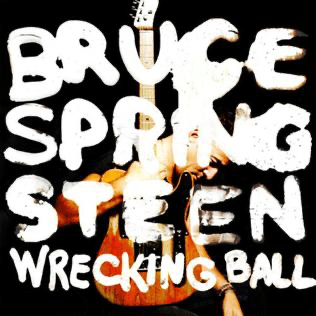
Wrecking Ball (2012)
This album sounds completely like an E Street Band album, even though it’s not. The songs are big, and the sounds and themes are complex and challenging. “Land of Hopes and Dreams” is perhaps one of Springsteen’s very best 2nd half songs. He had been performing this massive anthem that promises a bright future for everyone live in concert for years, and it quickly became a crowd favorite.
“We Take Care of Our Own” encourages people to care for each other, while acknowledging that doing so is getting much harder in modern day America. And while Springsteen got a lot of flack for the hip-hop rapping he included on “Rocky Ground,” I think it is pitch perfect, and deserves a place amongst some of his very best songs.

High Hopes (2014)
Springsteen continues the practice of highlighting older songs on High Hopes, which makes for an album that is a little less interesting and a little more scattered. However, “41 Shots” (which was over 15 years old at this point), a blistering condemnation of police violence in New York City, is undeniably brilliant.
The post-apocolyptic “Hunter of Invisible Game” might be a bit pretentious and overblown, but the strings and arrangements are gorgeous, and as always, Springsteen is flawlessly sincere and earnest in his delivery.

Western Stars (2019)
Western Stars is Springsteen’s love letter to the early 1970’s California sounds of artists like Burt Bacharach and Glenn Campbell. Accompanied by a full orchestra, the songs are lush and inviting.
The real standout for me is the “The Wayfarer.” The cellos carry the melody behind Bruce’s rhythm guitar, and are soon joined by a full orchestra also featuring drums, bass, piano, and French horns. (Check out the linked video above. A must watch!)
“Tucson Train” continues the themes of love, travel and restlessness and would have fit in perfectly on any E Street album.
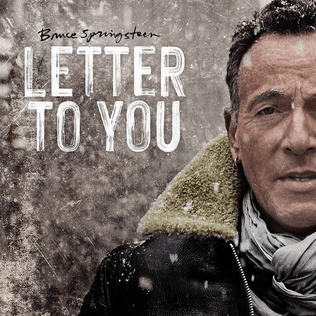
Letter to You (2020)
Released during the height of the COVID-19 pandemic, Letter to You was seen as a long overdue E Street return to form. Big songs about life, memories, and music. Songs to sing along to, with many excuses to pump our fists in the air. Real “red meat” for all the old-school Springsteen fans to savor and enjoy.
But again, Springsteen includes old, unreleased songs alongside his newest creations. Unfortunately, the old songs only serve to remind us that, at least in 2020, Springsteen is not the songwriter he once was. Songs like “Janey Needs a Shooter” and “If I Was the Priest” are truly excellent. The lyrics are breathtaking in their phrasing and creativity. On the new songs, he rhymes “blue” with “true”, “night” with “light,” and “you” with “true.” I know he can do better.
Considering only the new songs, perhaps the standout for me is “Ghosts,” which mourns the bandmates and friends he has lost through the years.
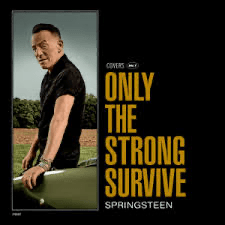
Only the Strong Survive (2022)
I know lifelong Springsteen enthusiasts who passionately dislike this album. “The worst thing Springsteen has ever done.” “Unlistenable and unforgivable.”
I think that type of response is too strong. This is an album of covers of great soul music from the Motown era. Sounding like carbon copies of the orignals in most instances, I find the album to be pleasurable enough to listen to, though I will never understand the inclusion of “Nightshift,” originally performed by the post-Lionel Richie Commodores. It was a bad song when it was originally released in 1985, and it’s a bad song now.
However, I love the fact that he recorded “I Wish it Would Rain” by The Temptations, one their very best. I also really like “Turn Back the Hands of Time,” featuring great horn arrangements and back-up harmonies.
Bruce Springsteen will soon be releasing his long awaited Tracks II box set, featuring seven unreleased albums he recorded between 1983-2018. As would be the case with any artist who has released the great volume of music Springsteen has, I anticipate there will be moments of brilliance alongside moments of disappointment. One thing for sure, I know it will be interesting.
I like your old stuff Bruce, but keep up the good work. I like a lot of your new stuff, too.


 All Together Now
Leave a comment