
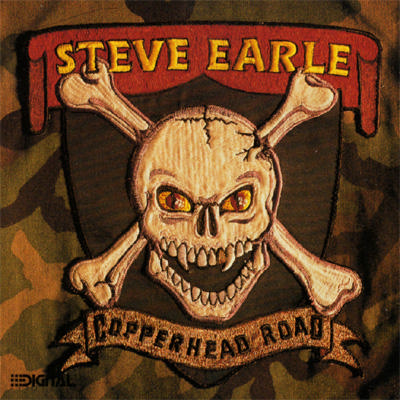


“Johnny Come Lately”
Written by Steve Earle
Recorded by Steve Earle
Released October 17, 1988
“I’m an American, boys, and I’ve come a long way
I was born and bred in the USA
So listen up close, I’ve get something to say
Boys, I’m buying this round.”
These first lines from Steve Earle’s “Johnny Come Lately,” off his amazing 1988 Copperhead Road album, could serve as an effective introduction for any American songwriter. Blues great Robert Johnson, folk troubadour Woody Guthrie, Bob Dylan, Bruce Springsteen, Madonna or Kendrick Lamar. I am here, and I have an important story to tell. I have something meaningful to say.
However, after the first lines of “Johnny Come Lately,” we realize this is not a biographical song about Steve Earle, but rather a story about an American soldier serving in London during World War II.
“When I first got to London it was pourin’ down rain
Met a Iittle girl in the field canteen
Painted her name on the nose of my plane
Six more missions I’m gone.”
The soldier arrives in London and meets a British girl. He tells the world of his love by painting the name of the girl on his plane, and he is already counting the hours and the missions until he can return to her. Later in the song he promises “I’m taking her home with me one day sir, soon as we win this war.” In the chorus, he sings of an expected warm welcome back in the states.
“But when Johnny Come Lately comes marching home
With a chest full of medals and a G.l. loan
They’ll be waiting at the station down in San Antone
When Johnny comes marching home.”
Through this song, World War II becomes connected to a shared, proud and painful past by recalling the popular “When Johnny Comes Marching Home” song from the American Civil War. Heroes were warmly welcomed home then, too. “When Johnny comes marching home again, Hoorah! Hoorah!” War to war, generation to generation, the men and women who put their lives at risk for our safety and democracy come home to celebrations of their heroism and bravery.
Then, there’s a twist. We learn that this story is not being told by the soldier, but rather by his grandson.
“Now my granddaddy sang me this song
Told me about London when the Blitz was on
How he married grandma and brought her back home
A hero throughout this land.”
The soldier did get home safely. He married his British bride. He was celebrated upon his return, and they had a family. They had a grandson.
The narrator is thinking about his grandfather as he himself returns home from the Vietnam war and realizes that the chain is now broken. The narrative has changed. Soldiers return home from a war that the people did not support or understand. The pride of the civil war is missing. The victory elation that followed World War II is missing. People are angry. People are apathetic.
“Now I’m standing on a runway in San Diego
A couple Purple Hearts and I move a little slow
There’s nobody here, maybe nobody knows
About a place called Vietnam.”
America is difficult. Our story is constantly changing and evolving. Families connect to the story of our country across generations, and those experiences are interpreted through vastly ever fluid perspectives and opinions. I don’t know that the story of our country and its families, now evolving through more than 150 years, has been ever been captured more effectively than Steve Earle has done in “Johnny Come Lately.”
This song, our country…a story about family, war and the patriotism and passion that connects us all. So listen up close, I’ve got something to say. Boys, I’m buying this round.
Check out this short 10 minute documentary film about Steve Earle recording “Johnny Come Lately” with Celtic Punk band The Pogues in North London.


 All Together Now
Leave a comment